


The language was part of the message. Ibolya Cseke of KNAPP chaired “The New Talent Race” in English, the first session in the history of the ILS Main Event to do so. Karl Hartleb, CEO of the Internationalisierungscenter Steiermark, picked up on this right away. Anyone who wants to bring talent to Austria, he said, will have to get used to the fact that not everybody speaks German. For him, that was “a bit of a wake-up call”.
ILS Main Event 2026 | 15. 10. 2026 | Day 2, „Mindset & Leadership“, 12:30 – 13:20 Uhr
Talent and migration go together
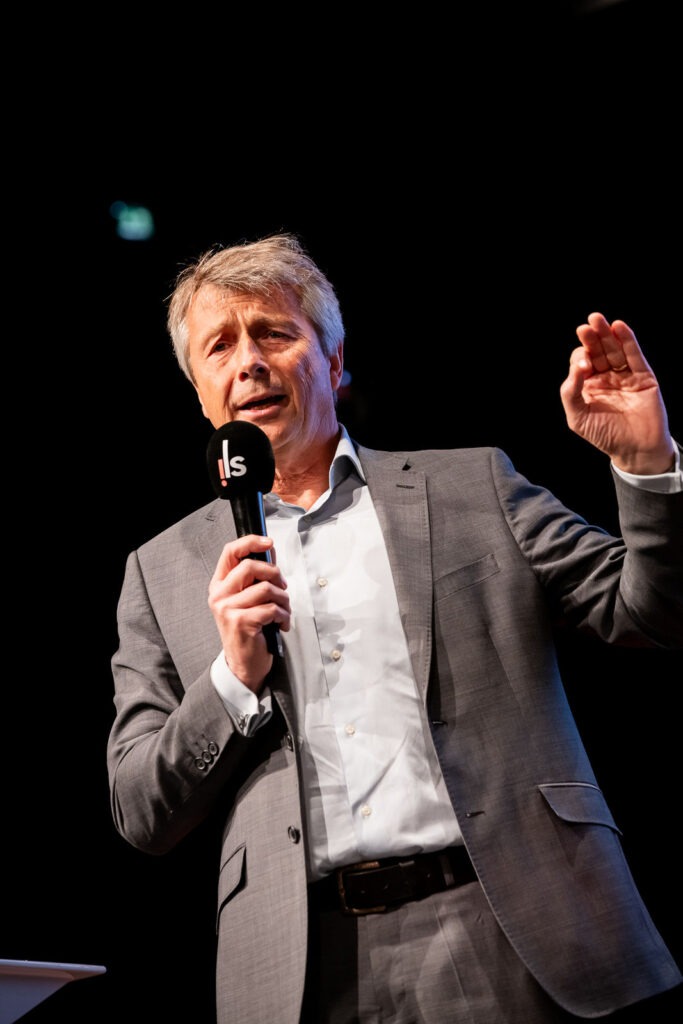
Hartleb spent decades abroad as an Austrian trade commissioner, most recently in Australia. In his keynote he described how differently countries respond to demographic change. Australia and Canada opened up to immigration early. Japan and China, by contrast, are betting heavily on automation and robotics, including in care for the elderly. Hartleb doubts that this will work in the long run. His view: “It’s very hard to separate talent from migration.” Immigration also brings consumption, he added. A grocery retailer, after all, delivers to people, not to robots.
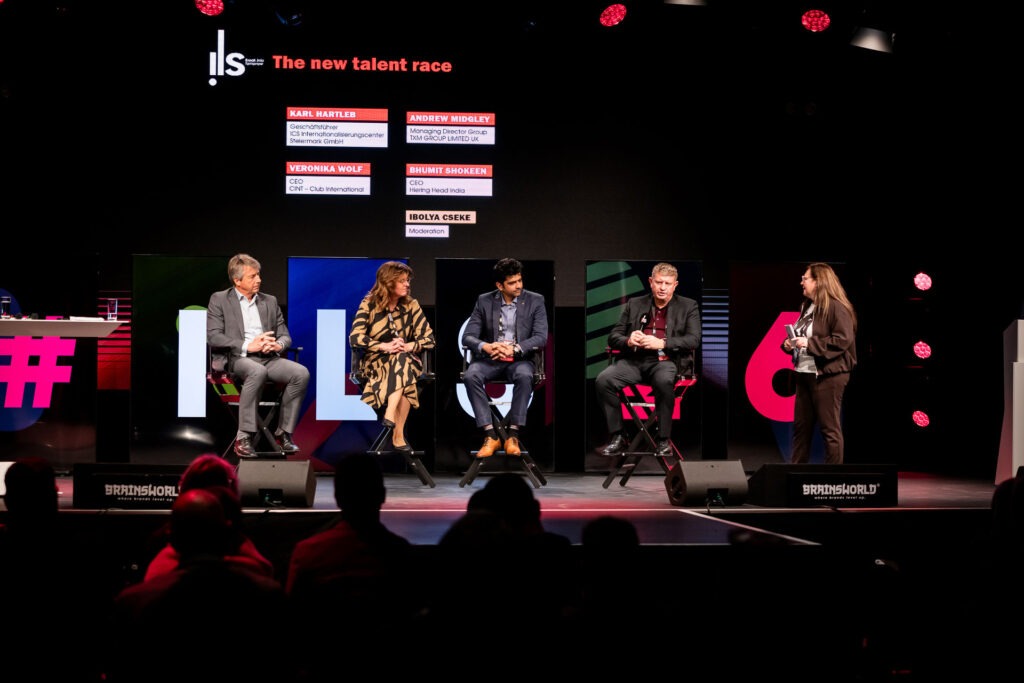
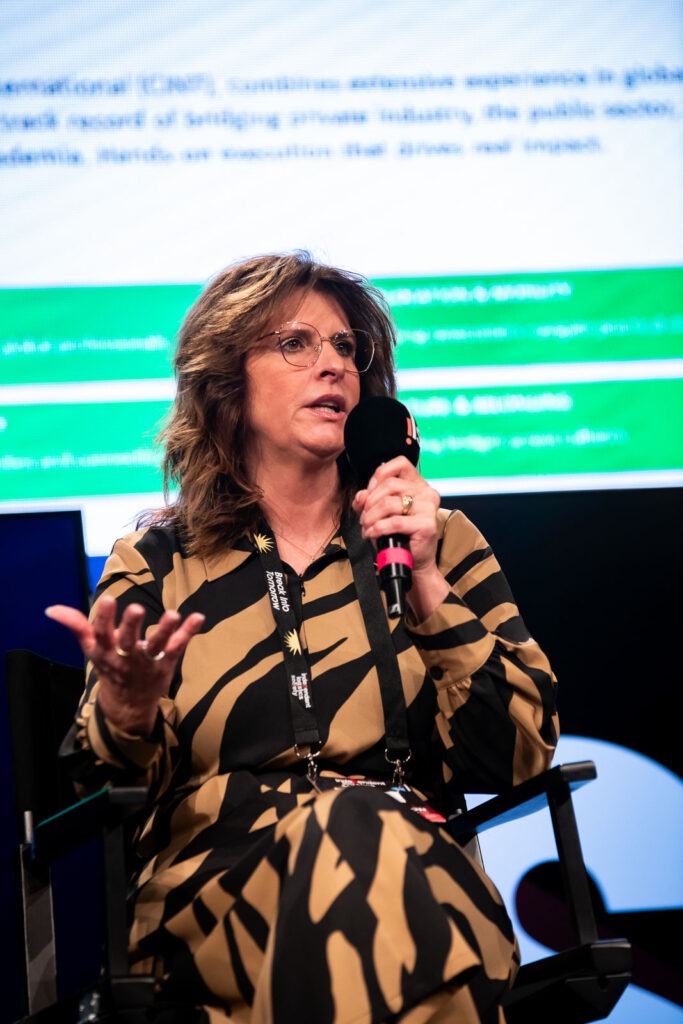
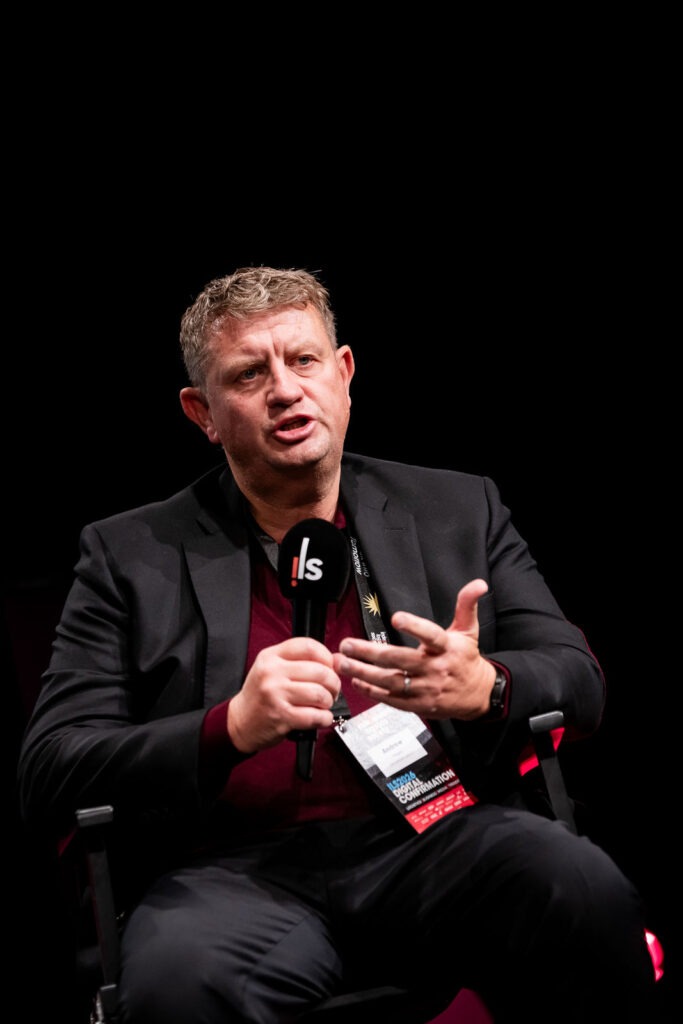
Karl Hartleb, Veronika Wolf, Bhumit Shokeen, Andrew Midgley and Ibolya Cseke
The real race right now, in Hartleb’s view, is for students. Technical universities are actively recruiting young talent, for example under the TU Austria umbrella with selected universities in India. The universities are open, he said, but Austrian industry is still hesitant to take these graduates on. He named Africa as the next talent pool, with good universities and strong interest in Europe. “German is not an advantage in this global competition.” Austria can still win people over with openness and quality of life.
Who are the best?
On the panel, opinions differed. Buhmit Shokeen, co-founder of Hiring Head in India, sees technology widening the gap between top performers and the median. “Every other company now is a technology company,” he said, and all of them are competing for the same small group at the top. Hartleb disagreed. Austria lacks the capital market to keep such people, he argued. He prefers to win talented people early through education and convince them with quality of life.
Andrew Midgley, CEO of TXM Group, turned the focus to company culture. With skills shortages and an ageing population, anyone who has hired someone needs to keep them. Cultural fit, he said, matters as much as qualifications. Veronika Wolf, CEO of CINT Club International, went a step further: the race only starts once someone has been hired. Companies need different metrics than the number of applicants or time to hire, such as the time to full productivity during the first two years. And integration always involves the whole family.
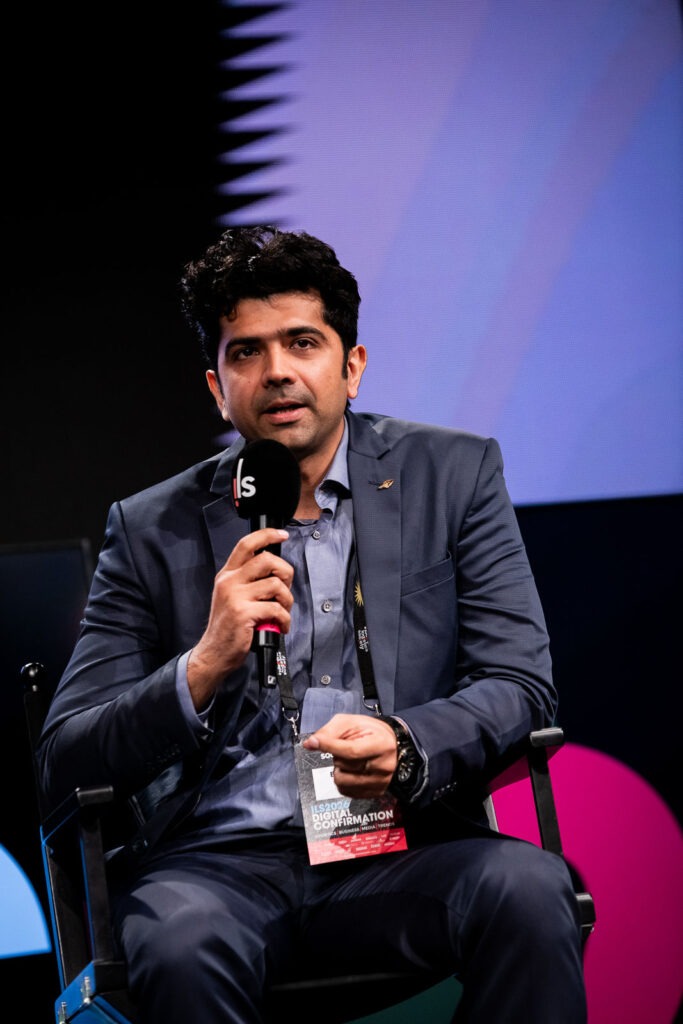
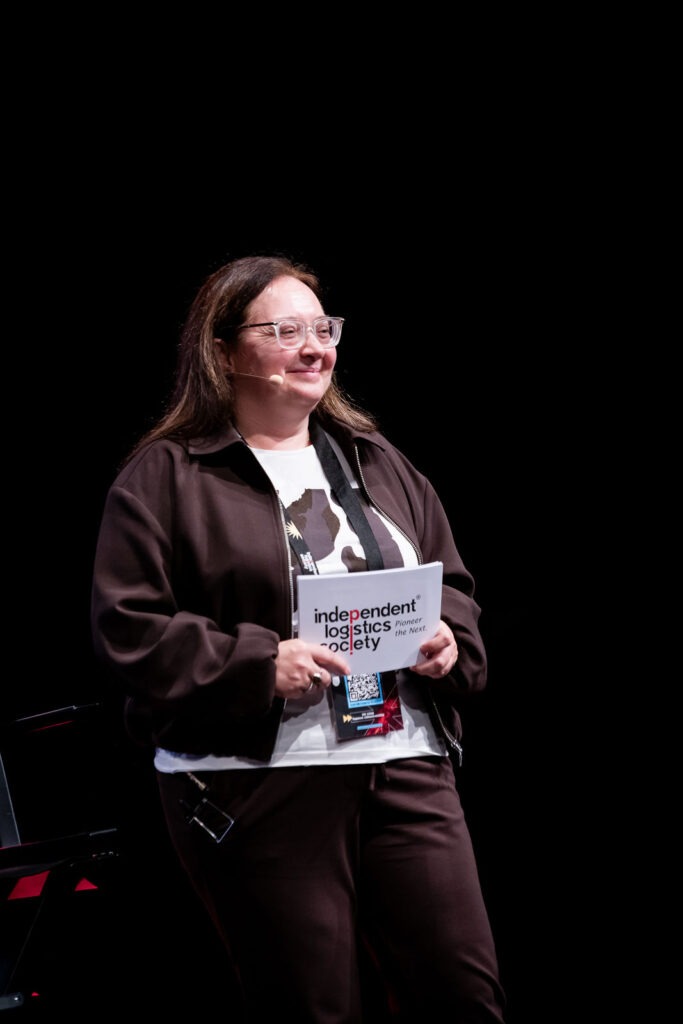
Bhumit Shokeen and Ibolya Cseke
AI in recruiting
When the talk turned to artificial intelligence, it got concrete. Midgley said TXM has introduced AI tools into its recruiting process, against some initial resistance in its own teams. Clients now expect faster and cheaper results, while the development costs money first. AI does not replace people. Because systems can hallucinate, a human has to sit “above the loop” and check the results. For Shokeen in India, AI is simply a necessity. A single job posting can attract thousands of applications within a short time, so screening and first-round interviews are automated. In his engineering division, too, AI has raised productivity sharply.
Wolf made the case for what remains human. An AI can deliver ten solutions in ten seconds, but the manager is still accountable. “You cannot fire AI for a wrong decision.” Then there is trust, which in Austria is often built through personal relationships, and the sense of belonging. If you have just arrived, have no social security number yet and your child falls ill, no AI will help you.
To close, Cseke asked what talent acquisition will look like in 2030. Midgley: more automation, “but still at the heart of it, people buy from people”. Wolf expects more of the pre-selection to be automated, which will make the first face-to-face interview even more important. Hartleb hopes Austria will reach out to talent from many regions, which would make integration easier for everyone.
Veronika Wolf, Andrew Midgley and Karl Hartleb
Mehr Fotos, Videos und Rückblicke findest du hier:
Fotocredit: ILS365 | CH-photo